Friday, March 30, 2007
Covenant Theology Part 5
Mosaic Covenant summary listen here
1. Preamble
Deuteronomy 1:1-5
2. Historical Prologue
Deuteronomy 1:6 – 4: 49
3. Ethical Stipulations
Deuteronomy 5:1 – 26:19
4. Sanctions
Deuteronomy 27:1 -1 30:20
5. Succession Arrangements
Deuteronomy 31:1 – 34:12
Of the Davidic Covenant listen here
The Davidic Covenant is the final Old Testament administration of the Covenant of Grace. It promised that David seed would sit on the throne of Israel and fulfill the Covenant of works on behalf of the people. The covenant promised that upon full obedience to God the King would enter into the Melchizedek priesthood and intercede not only for the Jew but also for the Gentile.
Covenant Theology Part 4
Covenant ratification (Gen 15)
Covenant administration (Gen 17)
The Mosaic Covenant was made 430 after the promise to Abraham after the exodus of the Hebrews from the land of Egypt. This covenant although was a further administration of the Covenant of Grace and was it self a re-administration of the Covenant of Works to Israel as a Nation under God. The Covenant had sanctions and stipulations that allowed the Jews to remain in the land and to be a blessing to the gentile nations of the world as long as they were obedient to the commands of the covenant. Israel was the son of God like Adam and therefore received the blessings and responsibilities of keeping the covenant of works as a nation. During this epoch of redemptive history the individual Israelite was saved by believing the Covenant promise that was given to their forefather Abraham.
Monday, February 26, 2007
Covenant Theology Part 3
Noah received the covenant promise as a descendent of Seth. He served as a priest, as a Son of God, in the days of great apostasy. Noah was a preacher of righteousness, but only him and his family was spared.
The Noahic Covenant established after the flood is a further administration of the Covenant of Grace to Noah and his descendants that God would never destroy the world with a flood again. The sign of the covenant was the rainbow, the command was to be fruitful and multiply. Human Government is also instituted with the introduction of capital punishment.
Monday, February 12, 2007
Covenant Theology Part 2
Introduction to Covenant of Redemption
The Covenant of Redemption is defined as “The Father gives the Son to be Head and Redeemer of the elect; and the Son presents himself as a Sponsor or Surety for them.” This covenant is between God and the Mediator, not the elect and God. The elect simply reap the benefits of this agreement between God and the Mediator. John 17:3, Luke 22:28, Rom 5:12-24.
The Covenant between the Father and the Son more fully explained.
The Covenant of Redemption was made in eternity past before creation (1 Pet. 1:20; Prov. 8:23,; Eph. 1:4; John 17:6; Rev. 13:8). This was a voluntary covenant. The Son did not have to agree to the covenant. This is foundation for the Covenant of Grace. It had to be voluntary in order to make redemption a legal transaction.
Of the Person of the Surety.
The Person of the surety had to be a sinless man born of virgin (to avoid original sin) in order to fulfill the demands of the Law Gal 4:4 Matt 5:17 and to propitiate man’s sins Rom 3:25,5:6-11 Gal 3:13. The Surety had to be God in order to enter in to the covenant voluntarily and to be the Sponsor of the Covenant of Works.
Of the Suretyship and Satisfaction of Christ
In order for Christ to expiate and propitiate the sins of the elect there needed to a vicarious substitution atonement. This involved the sins of the elect been imputed to Christ and then in turn having the wrath of God dues those sins placed on Him Isa 53:6-10, 1 Peter 2:23-24. He knew no sin became sin on our behalf 2Cor 5:21(Isa. 53:10; Matt. 20:18; John 10:15; 1 Pet. 3:18; Col. 1:21-22; Rom. 5:10; Heb. 9:15; Rom. 8:34).
What Sufferings of Christ are Satisfactory.
Christ active and passive obedience fully satisfies the demands of Law and to redeem the elect. He active obedience consisting of his sinless life and perfect love for the father, Matt 3:15, 5:17. His passive obedience consisting of the sufferings Christ, which include Gethsename, the floggings, and the Cross.
Of the Efficacy of Christ's Satisfaction
The efficacy of Christ's satisfaction is twofold. First, Christ obtained for himself, as Mediator, a right to all of the elect (Ps. 2:8; Isa. 53:10). Christ obtained for the elect immunity from all misery and a right to eternal life to be applied to them (Matt. 26:28; Gal. 1:4; Tit. 2:14). Christ did not achieve a bare possibility of salvation but actual salvation for His elect. The idea of redemption, ransom and price of redemption infers the reality and not possibility of salvation. Scripture declares that the proximate effect of redemption is actual salvation (Rom. 3:24; Eph. 1:7; Col. 1:14; Heb. 9:12; 1 Cor. 6:20; Acts 20:28; Gal. 4:4-5). .
Of the Necessity of Christ's Satisfaction.
The following may be set forth as real and true arguments in favor of the necessity of Christ's satisfaction. First, an unnecessary satisfaction is contrary to the goodness, wisdom and holiness of God. Second, an unnecessary satisfaction mitigates against the Scripture's stress on the great love of God as demonstrated in the giving of his Son. Third, Christ's satisfaction was a declaration of the righteousness of God which cannot be overthrown (Rom. 3:25). Fourth, animal sacrifices could not atone for sin (Heb. 10:1,4,11) only the sacrifice of Christ could atone for sin. Fifth, Hebrews 10:26 infers that sacrifice is necessary for pardon. Sixth, the necessary satisfaction of Christ exalts the attributes of God. Seventh, the necessary satisfaction of Christ promotes Christian piety. Eighth, the necessary satisfaction of Christ does not detract from any of God's attributes.
Of the Persons for whom Christ Engaged and Satisfied.
There is ample Scriptural support for the doctrine of particular atonement. The "all" of 2 Cor. 5:15, Heb. 2:9, Col. 1:20, and 1 Tim. 2:6 is restricted to the elect, which means exegetical work is needful in order to understand the passages in question. The term "world" in such passages as 1 John 2:2 refers to "the collective body of believers or of the elect." Specifically, the Scripture says that Christ died for his sheep, his church, his people, and his peculiar people (cf. John 10:15; Acts 20:28; Eph. 5:25; Tit. 2:14).
After what manner Christ used the Sacraments
For Christ, the sacraments were signs and seals of the covenant between God the Father and God the Son. It demonstrated the benefits of salvation for His church and that they were promised to Christ. As a result of these promises, Christ promised to faithfully redeem the elect.
The Covenant of Grace (fodues gratiae) part 2 listen here
Of the Adamic Covenant
The Adamic Covenant was the first administration of the Covenant of Grace beginning in Gen 3:15 also know as the protoevangelicum. This Covenant promised that the seed of the women (The Messiah) would destroy the work of the Serpent (the Devil). The covenant community began with Adam and his sons Cain and Abel who were priest as ministers to the first family in Eden. After the Death of Abel Seth became heir of the promise. His descendants became known as the sons of God and served as priests for the family of Seth.
Thursday, January 18, 2007
Intro to Covenant Theology
Of Covenants in General listen here
Major Theme of Scripture: The Kingdom of God offered to man by way of covenant.
Definition:
Covenant is from the Hebrew [ber-eeth] meaning to cut, and by extension means a promise or pledge to do something. "It is an agreement upon the promises concerning the relationship between two or more parties. In Biblical terms the covenant is the prime agency of God's self-revelation in history. God reveals Himself to be the covenant God. The essence of the covenant between God and man is "I will be your God, and you will be My people."
Covenant makeup:
Historical prologue
New order
Stipulations
Sanctions
Administrations
Treaty Between Equals - PARITY COVENANT (bi-lateral)
A. Partners in the covenant are called brothers.
B. Stipulations:
1. Acknowledgment of mutual boundaries.
2. Return of each others run away slaves.
C. Biblical Examples:
1. Midianite Treaty - Exodus 18
2. Between King David and King Hiram - 1 Kings 5:1ff
3. Genesis 21:27; 26:31; 31: 44-54; 1 Kings 15:19; 20:32-34.
Treaty Between a Great King and a Minor King - SUZERAIN or VASSAL COVENANT
1. Preamble - This included the titles and attributes of the Great King and serves to introduce the document.
2. Historical Prologue - Summary of the relationship between the two kings and their ancestors. Actual historical events are cited, especially those that were benevolent on the part of the Great King.
3. Stipulations:
A. Exclusive relationship between the two kings
B. Hostility prohibited against other vassals of the Great King
C. Help in time of war - both ways
D. Slander against the Great King reported
E. Return runaway slaves
F. Vassal to appear yearly to renew the covenant and pay his taxes
G. The covenant is to be written down and placed in the temple of the vassal
H. Covenant to be read periodically
4. Blessings and Curses
A. List of gods called to witness the document
B. Sometimes natural phenomena are also called as witnesses to the document
C. Curses go into effect if the covenant is broken and the Blessings if it is kept
D. One of the blessings was usually a guarantee of the perpetual reign of the descendants of the vassal king
B. Biblical Examples:
1. Gibeonite Treaty - Joshua 9-10
2. Covenant at Mt. Sinai - Exodus 20, Deuteronomy
3. Davidic Covenant - 2 Samuel 7
4. Genesis 17:1ff; Ezekiel 17:13-18; Hosea 12:1.
2 Kings 24:1, 1 Kings 17:3
Treaty Between a King and a loyal servant - ROYAL GRANT COVENANT
A. Royal Land Grants were given to a servant or subordinate for faithful or exceptional service to the king
1. This type of covenant was usually perpetual with no specific conditions. It was, however, understood that the behavior of the heirs would continue to follow the original recipient's loyal example.
2. Most covenants of this type contained the same kind of blessings and curses found in the Vassal Covenant with gods being called on as witnesses.
B. Biblical Examples:
1. Noahic Covenant - Genesis 9:8-17
2. Abrahamic Covenant - Genesis 15: 9-12
3. New Covenant - Jeremiah 31:31-44
4. Numbers 25:10-31; 1 Samuel 8:14; 22:7; 27:6; 2 Samuel 7:5-16; Esther 8:1.
Of the Covenant of Works (fodeus operum) listen here
Of the Contracting Parties in the Covenant of Works:
God as the Suzerain King makes covenant with Adam the vassals servant. This covenant not only is non-negotiable on the part of Man (as represented by Adam) but it is essential to being the Image bearer of God. God enthroned Himself over creation and entered into His eternal Sabbath. The image bearer is to designed to obtain the same blessedness by the same means, that is work. Gen 1-2
Of the Law or Condition of the Covenant of Works:
The covenant was conditional Hos 6:7 The conditioned contained Adam keeping the law of the conscience Rom 2:15, not eating of the tree of Knowledge and taken dominion Gen 1:26-28
Of the Promises of the Covenant of Works:
The promise of eternal life was offered Man if he was to fulfill all the terms of the covenant. Eternal life is glorification. Glorification is abiding where God is enthroned over creation. This was represented by the tree life which served as a pledge of that future inheritance.
Of the Penal Sanction:
God threatens Adam with the curse of being under the wrath of God if he does not keep the terms of the Covenant Gen 2:15-17. This is represent with the tree of Knowledge.
Of the Sacraments of the Covenant of Works:
The Tree of Life is sacramental of eternal life. Access to this tree would have be granted to Adam upon confirmation of justification Rev 22:2,19. The Tree of Knowledge is sacramental of eternal damnation. Adam ate of this tree as and violates the Covenant of works.
Of the First Sabbath:
The first Sabbath is sacramental of the eternal Sabbath rest that man could one day enjoy if he had kept the Covenant of Works. It served as a reminder of that future inheritance.
Of the Violation of the Covenant of Works on the part of Man:
Adam by partaking of the Tree of Knowledge violated the Covenant Works; consequently placing himself and his posterity under the curse of God, resulting in amenity between man and God.
Of the Abrogation of the Covenant of Works on the part of God:
Although man, because of the transgression Adam, is now incapable of keeping the demands of the Covenant man is still obligated to keep the Covenant. The Covenant is a reflection of God’s immutable character therefore it is irrevocable.
Thursday, December 7, 2006
Systematic Theology Part 11
Definition: The consummation of human history.
Man’s purpose is eschatological. Adam pre fall was eschatological focused:
- Order of human history pre-fall, Creation, Justification, Dominion, Glorification.
- Order of human history post-fall Last Adam the first fruits and those that are His at His Coming. Eschatology predates Soteriology.
Personal eschatology
Death – The breath life ceases, the soul departs at death. 2 Cor 5:1-10,
Intermediate state – Believers are immediately in the presence of God
- Unbelievers are immediately judge in hades.
- Both await resurrection on the last day.
The different eschatological hermeneutics
Futurism
Preterism (correct)
Historicism
Idealism
Tribulation Past or Future
The tribulation in Christ’s generation Matt 24:34
The Day Lord happened AD 70 1 Thess 5:2, 2 Thess 2:2, 2 Peter 3:10
The Day of Christ did not. 1 Phillip 1:6,10
The different views of the Millennium
Amillennialism (correct)
Postmillennialism
Premillennialism
The Eschatology yet future
The Second Coming of Christ 1 Cor 15, Acts 1:11, 1 Thess 4:16
The Final Judgment (Judgment seat of Christ) John 5:29-30, Rev 20:6-12,
The General Resurrection John 5:29-30, Acts 17:31, Acts 24:15
The New Heavens and New Earth Rev 21
THE END
Systematic Theology Part 10
Definition: The Assembly
Those that have been redeemed by God in order to serve and worship Him, calling upon His name both individually and corporately this present evil age.
History of the church:
Old Testament and the church under age
The Sanctuary of God: Adam-Noah was Eden, Noah to Moses (None, but alter centered worship), Moses to David was the ark covenant and the tabernacle, David to Christ was the temple.
New Testament and church in maturity
Christ to Pentecost was Christ, Pentecost to Second Coming the cooperate body of Christ. Second Coming to endless eternity it will be the cosmos.
The Inauguration of the New Testament Church:
Pentecost the birth of New Testament of Church (see pneumatology)
The three Marks of a true Church:
Word, Sacrament and church discipline
Purpose of the Church:
Exaltation/Worship: The regulative principle of worship, not the nominative
Edification: Believer gifts and love build up the church
Evangelization: To preach the gospel to ever creature
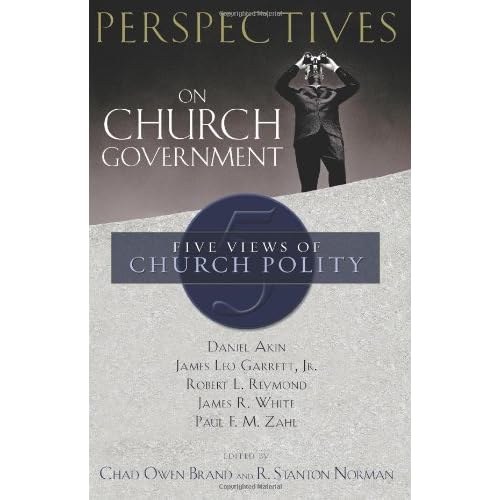
The government of the Church:
Different views:
Episcopalianism
Presbyterianism
Congregationalism
Plurality of Elders
Offices of the Church:
Foundational/extraordinary office: Apostles, Prophets, Evangelist
Continual/ordinary office: Pastor and Teacher/Elder, deacons, Missionaries (Apostolic/evangelistic)
Qualification and duties of an Elder:
1 Tim 3:1-8, Titus 1:5-9
Qualifications and duties of a Deacon:
1 Tim 3:9-12
Means of Grace:
Word
Mark 16:16-17, Matt 28:20, 1 Cor 1:17-23
Sacraments
Lord’s supper I Cor 11:17-26, Baptism Matt 28:19, 1 Peter 3:20, Heb 8 (credo position)
The Lord’s Day
Rev 1:10, Acts 20:7, Matt 28:1 The first day of the week.
Prayer
The Lords Prayer, Submission, Worship to God. Rom 8:26 pray according to His Will.
Systematic Theology Part 9
What is salvation?
To be delivered from one’s sins as fallen creature in Adam into the Kingdom of God with all of its benefits by the reconciliatory work of Christ.
Plan of Salvation
God’s decrees
Supralapsarianism or infralapsarianism?
Covenant of Redemption (Heb 13:20)
Overview of redemptive history
The unity of the Covenant of Grace (Eph 2:12, 2 Cor 1:20):
Adamic (Gen 3:15)
Noahic (Gen 9:4)
Abrahamic (Gen 12:1-3, Gen 15:6, Gen 17:1-11)
Mosaic (Ex 24:6-8, Gal 3:23)
Davidic (2 Sam 7:14)
New Covenant (Heb 8:1-13)
Ordo Salutis:
Election (1 Peter 1:2)
Predestination (Rom 8:29, Eph 1:3-4)
Gospel call (Matt 22:14)
Effectual call (Matt 22:14)
Regeneration (Titus 3:5, Eph 2:3)
Repentance (Act 2:38 Heb 6:2)
Justification (Gal 2:16-18)
Adoption (Rom 8:14-16)
Sealing of the Holy Spirit (Eph 1:13)
Sanctification (2 Cor 7:1, 1 Thess 5:23)
- Walking in the Spirit/the infilling of the Spirit Eph 5:17
- By faith in Christ. Col 3:16
Glorification (Rom 8:30)
Systematic Theology Part 8
Holy Spirit as a distinct person within the Godhead
True and full deity (Act 5:3-4, 2 Cor 3:17)
Co-equal with Father and the Son (Matt 28:19, 1 Cor 12:4-6, 2 Cor 13:14)
Personhood of the Spirit: He (John 15:26) Will (1 Cor 12:11) Power (Rom 15:13, Eph 3:16) Love Rom 15:30
Holy Spirit in the Old Testament
- in creating the world (Gen 1:1-2)
- in salvation of the OT elect (1 Pet 1:12)
- in anointing OT saints (Num 11:24-30)
Prophesy of the eschatological outpouring of the Spirit
Joel 2:28-32 the Spirit coming to the people of God once and for all
In order to anoint and empower for ministry (Act 1:6-8)
The coming of the Spirit and Pentecost
Fulfillment of Joel (Act 2:16-18, John 7:39)
The inauguration of the church (John 16:7-11)
The birth of the body of Christ (John 14:16-18)
Apostolic Sign and Wonders (Heb 2:3-4)
The Holy Spirit in Salvation
- regeneration (Titus 3:5)
- sealing of the Spirit (Eph 2:13)
- the baptism of the Spirit (1 Cor 12:13)
- the infilling of the Spirit (Eph 5:18)
- the Spirit will give life to our mortal bodies (Rom 8:11)
The Holy Spirit today
The cessation of the revelatory gifts/closing of the cannon (John 15:13, Jude 3)
The on going work of the Spirit through Word and Sacrament (2 Tim 4:2, John 6:63)
Prayer – in the Spirit/ the will of God (Jude 20, Rom 8:26,27)
The Spirit interceding for the saints (Rom 8:26)
Systematic Theology Part 7
Christ in eternity past
Christ is the eternal Son of God 1 John 4:9
Christ creates the universe Col 1:15-17
Christ in the Old Testament
No man has seen the Father but the Son John 1:18
Christophanies in the Old Testament – An appearance of Christ in human form
e.g. Jacob wrestled with Christ Gen 32:24-30, The elders see Christ Exodus 24:9-12
Christ was the Angel of the Lord - An appearance of Christ in human form in the role of a messenger.
e.g. Gen 16:7-14,Abraham, Gen 21:17 to Hagar twice, Exodus 3:14, 23:20-21 to Moses, Numbers 22:21-35 Balaam, Joshua, Judges etc
Christ’s incarnation and birth
By the power of the Spirit by means of a virgin: Isa 7:14, Matt 1:16-23, Luke 1:26-35. The purpose was to avoid original sin, he is the second man 1 Cor 15:47
Christ the God man –Theo-anthropos, The Word became flesh and dwelt amongst us. John 1:14, in the one person Jesus Christ, made like his brothers in every way Heb 2:14. Kenotic theory heretical
Why Christ had to be fully God and fully man
God to redeem and forgive sins i.e the covenant of redemption
Man to be our substitute in active and passive obedience
Christ’s secret years
Christ as child, Christ at 12 in the temple, Christ growing in favor with God and man. Luke 2:41-52
Christ’s public Years (the prophet)
Christ baptism and anointing, Christ mission, to save His people from their sins Matt 1:21 Christ’s ministry and miracles in order to usher in the eternal Kingdom of God. He was The Prophet Acts 3:22-23
Christ’s passion and atonement
The vicarious penal substitutionary atonement John 1:29 The Lamb of God
Propitiation and expiation Rom 3:23-26, 1 John 2:2, Heb 2:17
Forensic and reconciliatory 1 Cor 5:17-21 The Great Exchange
Christ’s Resurrection
Christ victory over the grave, the proof that His work was accepted by the Father
1 Pet 3:1 Rom 1:4
Christ’s Ascension (Priest and King)
Christ enthronement as King of Kings and Lord of Lords (Eph 1:20-22, Rev 19:16) Entering the Priesthood in the order of Melchizedek Heb 5:5-6,7:21-23)
The coming of the eschatological Spirit and the inauguration of the church Act 1:5-11
Christ waiting for all His enemies to be made His footstool 1 Cor 15:25, Heb 10:13)
Christ’s Second Coming and the Final Judgment of the world
Christ’s return will consummate the Kingdom Glorying both creation and the saints 1 Cor 15:20-28, Acts 1:11, 1 Thess 4:16-19, Rom 8,:20-24. An end to sin and death I Cor 15:54, Rev 21:4. The end of redemptive history.1 Cor 1:24
Christ is the Judge of the ONE general resurrection of the dead John 5:25-29, Acts 17:31